
knowledgemakesdollar.com

Knowledge Makes Dollar

Smart Money Decisions Start With the Right Financial Knowledge

From building your first budget to reaching financial independence, we break every step into plain language so your money starts working as hard as you do.

client feedback

0

Overall Reviews

Young Indian professional using a laptop with futuristic financial dashboards, investment charts, and fintech analytics

Explore with us

about us

Your Trusted Source for Financial Literacy and Money Management

our vission

Most people were never taught how money actually works.

our Mission

We publish practical, research-backed personal finance guides.

Finance content on the internet ranges from genuinely useful to dangerously oversimplified. We hold a strict editorial standard: no guaranteed outcomes, no clickbait promises, and no advice that sounds good in a headline but falls apart in practice. What you find here is grounded, honest financial education — written for people who are serious about changing their financial situation, one informed decision at a time.

Young person experiencing a financial knowledge breakthrough with a glowing light bulb and finance symbols in a modern illustration style.

WHY CHOOSE US

Everything You Need to Build Lasting Financial Confidence

Seven focused topics. One practical goal spend less, save more, invest smarter, and build wealth that lasts.

Budgeting

A budget is not about restriction it is about intention. Learn how to track your monthly spending, set up a budget that is realistic to maintain

Investing

You do not need a large sum to begin investing. Discover how index funds and ETFs work

Saving Money

Saving money consistently is less about sacrifice and more about systems.

Debt Management

Debt does not have to define your financial future

How We Approach Personal Finance Content

Personal finance is a field where poor advice carries real consequences. A misleading investment tip, an oversimplified debt strategy, or an income claim that cannot hold up in real life these things cost people money, time, and trust. That is the standard we hold ourselves to every time we publish.


Research-Backed, Not Opinion-Driven

Every guide is built on established financial frameworks and verified data.

Plain Language, Real Scenarios

We do not use financial jargon to signal credibility

No Guaranteed Outcomes

We will not promise you will retire in five years or eliminate $40,000 in debt by next quarter.
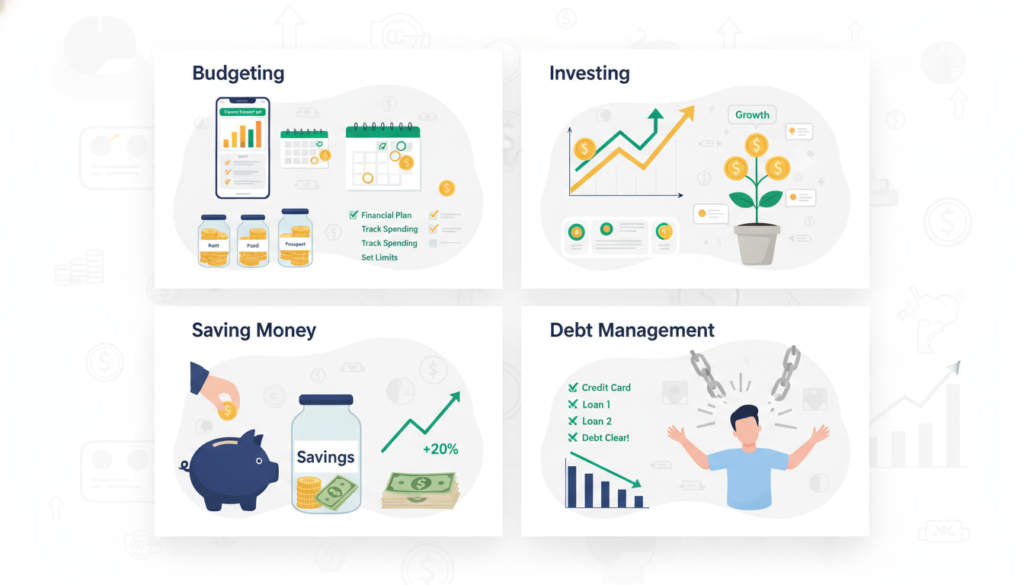
Flat vector illustration showing budgeting, investing, saving money, and debt management concepts with finance apps, piggy bank, stock charts, savings jars, and broken chains.
0
Finance Topics Covered
0
Free Financial Tools
0%
Free to Read — Always

asked questions

Frequently Asked Personal Finance Questions

Real questions, answered clearly without unnecessary complexity or vague advice.

The most practical first step is to track every dollar you spend for 30 days without changing anything. This gives you an honest baseline. From there, apply the 50/30/20 rule: allocate 50% of your after-tax income to needs, 30% to wants, and 20% to savings or debt repayment. A free budget planner or a simple spreadsheet is all you need to get started. The method matters less than the consistency of applying it every month.

Two structured methods work well for any income level. The debt snowball targets your smallest balance first, building momentum as each debt is eliminated. The debt avalanche targets the highest-interest debt first, saving the most money mathematically over time. Either approach works the right one is the one you can commit to consistently. Freeing up even $50 per month by reducing discretionary spending and redirecting it toward debt accelerates your payoff timeline meaningfully within 12 to 18 months.

You can begin investing with as little as $1 through fractional share investing platforms. A more sustainable starting point is $50 to $100 per month consistently invested in a low-cost index fund or ETF. The amount you start with is far less important than how early you start and how consistently you contribute. A person investing $100 per month from age 25 will typically accumulate significantly more wealth than someone investing $500 per month starting at age 40, due to the long-term effect of compound interest.

A FICO score of 700 to 749 is considered good, and 750 and above is very good to exceptional. The five factors that determine your score are: payment history (35%), credit utilization ratio (30%), length of credit history (15%), credit mix (10%), and new credit inquiries (10%). The fastest improvements come from paying every bill on time, keeping your credit card balances below 30% of your available limit, and avoiding opening multiple new accounts within a short period.

blog & article

Latest Personal Finance Guides

In-depth, up-to-date articles on budgeting, investing, saving, debt, credit, and financial independence written in plain language for real people making real money decisions.

Index Funds vs ETFs: Which Is Better for Beginners?

Index Funds vs ETFs: Which Is Better for Beginners? If you are new to investing, you have probably...

How to Improve Your Credit Score Fast: Step-by-Step Guide (2026)

How to Improve Your Credit Score Fast: Step-by-Step Guide (2026) Your credit score is a three-digit...

Best Side Hustles to Earn $500-Month in 2026(Realistic & Beginner-Friendly Ideas)

Best Side Hustles to Earn $500/Month in 2026 (Realistic & Beginner-Friendly Ideas) Earning an...

10 Easy Ways to Save Money Every Month – Practical Tips 2026

10 Easy Ways to Save Money Every Month – Practical Tips 2026 Managing money wisely has always been a...

How Much Money Do You Need to Retire Early

How Much Money Do You Need to Retire Early Leaving the workforce in your 30s, 40s, or early 50s is...
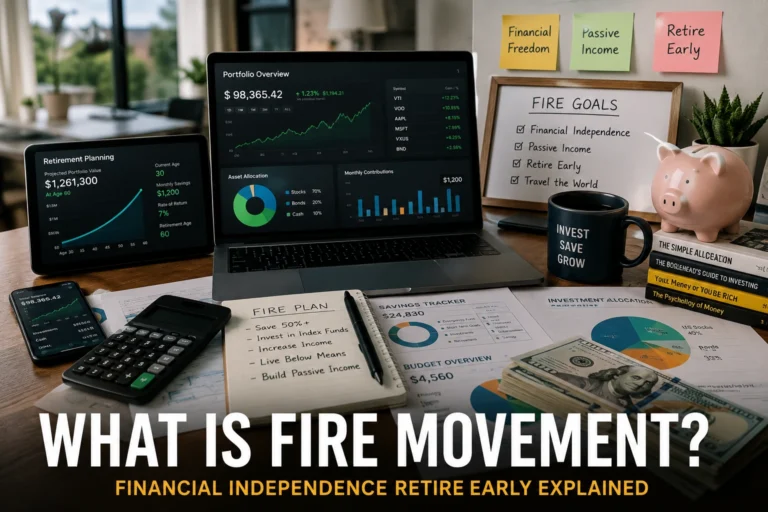
What is the FIRE Movement | Guide by Knowledgemakesdollar

Imagine waking up on a Tuesday morning with nowhere you have to be, no boss to report to, and a...

How to Start Investing with $100 | Guide by Knowledgemakesdollar

Many individuals believe that investing is reserved solely for the rich. They imagine Wall Street...
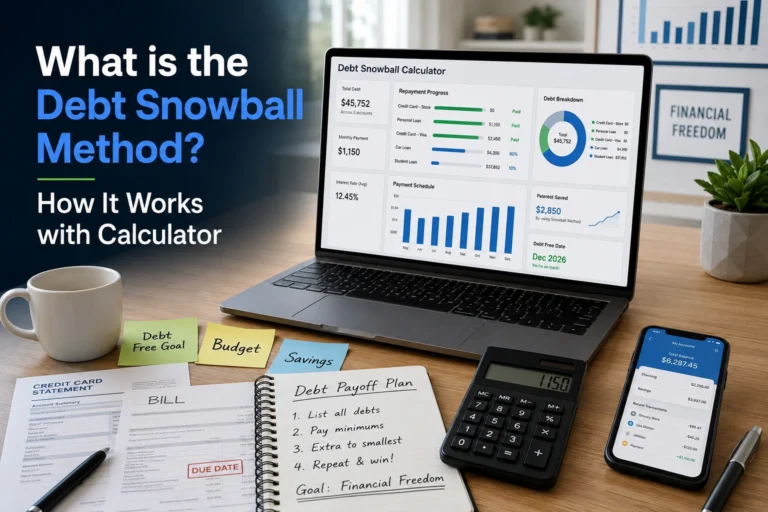
What is the Debt Snowball Method? How It Works with Calculator

Introduction Debt has become one of the most pressing financial challenges in modern life. From...
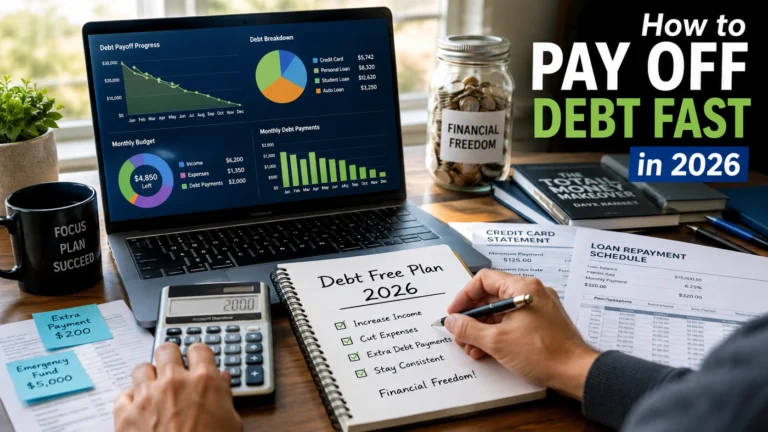
How to Pay Off Debt Fast – Guide For You By Knowledgemakesdollar

Introduction Personal debt has reached record levels in 2026. Rising living costs, easy access to...
Scroll to Top